Buildium and QuickBooks Integration: A Complete Guide for Property Managers
Managing rental properties means balancing tenant communication, rent collection, vendor payments, and owner reporting, all while staying compliant with state and federal accounting rules. While property management software like Buildium simplifies the operational side, accounting tools like QuickBooks ensure accuracy in financial reporting. When used together, Buildium and QuickBooks create a streamlined ecosystem that empowers property managers to work smarter, faster, and more accurately.
This article explores how Buildium and QuickBooks complement each other, why their integration matters, and how real-world examples demonstrate their effectiveness for landlords, property management companies, and real estate investors.
Understanding Buildium and QuickBooks
Buildium is an all-in-one property management software tailored to landlords and property managers. It manages rent collection, tenant communications, lease tracking, and maintenance workflows. More importantly, it provides property-level financial management, ensuring that every payment, deposit, and expense is tracked within the system.
QuickBooks, developed by Intuit, is one of the most widely used accounting platforms in the world. It specializes in bookkeeping, payroll, tax preparation, and general ledger management. For businesses, it serves as a foundation for accurate financial records and compliance reporting.
Together, Buildium and QuickBooks bridge the gap between property management operations and advanced accounting, allowing managers to align property-level data with broader business finances.
Why the Integration Between Buildium and QuickBooks Matters

One of the biggest challenges in property management is duplicate data entry. Without integration, a property manager may need to record rent payments in Buildium and then manually input the same transaction into QuickBooks. This increases the risk of human error and wastes time.
With integration, transactions flow seamlessly from Buildium into QuickBooks. Rent payments, vendor expenses, and owner distributions are automatically updated, ensuring financial records remain accurate across both platforms. This not only saves hours of manual work but also creates a transparent audit trail for compliance.
Real-World Examples of Buildium and QuickBooks in Use
Example 1: Small Portfolio Landlord
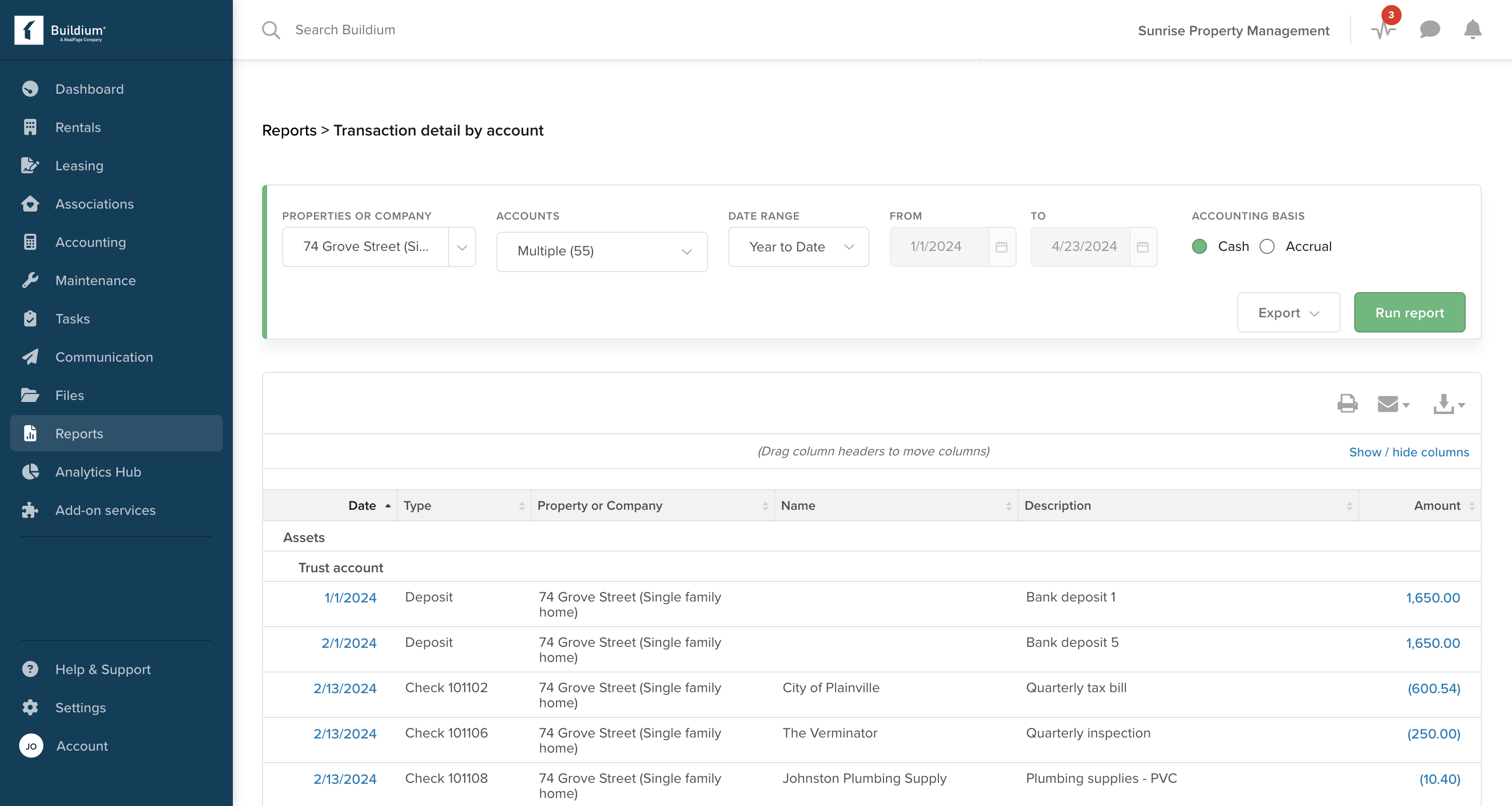
A landlord managing 15 rental units uses Buildium to collect rent online and manage maintenance requests. By syncing with QuickBooks, each payment automatically updates in their general ledger. This allows the landlord to quickly generate profit-and-loss statements without manual reconciliation.
The result is a system that saves hours every month, ensures accuracy during tax preparation, and gives the landlord confidence in their financial data.
Example 2: Mid-Sized Property Management Firm

A property management company overseeing 200 units relies on Buildium for day-to-day tenant operations. Rent collection, late fees, and vendor invoices are tracked within Buildium. QuickBooks then provides consolidated financial reports that can be shared with property owners.
This transparency is critical for client trust. Owners see accurate reports, tenants enjoy streamlined payment systems, and managers focus more on growth rather than paperwork.
Example 3: Compliance in Trust Accounting

In many states, property managers must keep tenant deposits in separate trust accounts. Buildium tracks property-specific transactions, while QuickBooks ensures deposits and operating funds remain separate in the books.
This dual system helps managers demonstrate compliance during audits and avoid penalties. For firms handling security deposits across hundreds of properties, the combination of Buildium and QuickBooks is essential.
Example 4: Multi-Owner Investment Group
Consider an apartment complex owned by multiple investors. Buildium handles the collection of rent and payment of expenses. QuickBooks ensures each investor’s share of profits is recorded correctly and distributed accordingly.
By providing clear financial breakdowns, property managers can maintain trust among investors, avoid disputes, and ensure transparency across partnerships or real estate syndications.
Benefits of Using Buildium and QuickBooks
Improved Efficiency
The integration eliminates repetitive data entry, ensuring financial transactions are recorded once but visible in both systems. This saves time and reduces workload for property managers.
Greater Accuracy
Human error is a major risk in accounting. Automated syncing between Buildium and QuickBooks ensures numbers remain consistent, reducing the chance of mistakes that could harm financial credibility.
Tax and Compliance Readiness
Both platforms support proper categorization of income and expenses. When tax season arrives, managers already have clean, audit-ready books.
Scalability
Whether you manage 10 units or 1,000, Buildium and QuickBooks grow with your portfolio. Their combined functionality ensures operations and finances stay organized, regardless of scale.
Practical Use Cases
Streamlining Rent Collection
When tenants pay rent online through Buildium, those payments automatically sync with QuickBooks. This creates real-time accuracy in both systems without manual updates.
Vendor Expense Management
Invoices for repairs and maintenance can be logged in Buildium, with expenses reflected in QuickBooks. Managers get a complete picture of property expenses, ensuring nothing falls through the cracks.
Owner Reporting
Owners want timely financial insights. Buildium organizes property-level data, while QuickBooks produces professional-grade reports that owners can rely on for decision-making.
Simplified Tax Preparation
All income and expenses are properly categorized, making tax filing straightforward. The integration ensures managers are not scrambling to organize records at the last minute.
Why This Matters in Real Life
In the real world, property managers face constant demands from tenants, owners, and regulators. Mistakes in bookkeeping can lead to disputes, financial losses, or even legal penalties. By combining Buildium and QuickBooks, managers gain confidence in their financial workflows, protect against errors, and provide transparency to stakeholders.
For landlords, this means peace of mind. For investors, it means trust. And for managers, it means less time on accounting tasks and more time growing their business.
Frequently Asked Questions
1. Can Buildium fully replace QuickBooks?
No. Buildium is focused on property management tasks like rent collection and maintenance tracking, while QuickBooks specializes in accounting, payroll, and tax preparation. Together, they provide a complete solution.
2. Is integration worth it for small landlords?
Yes. Even with a small number of units, integration reduces manual entry, saves time, and ensures accurate financial records, especially during tax season.
3. Does this integration support compliance with state trust accounting laws?
Yes. Buildium ensures property-level accuracy, while QuickBooks maintains the financial structure needed for trust accounting compliance. Together, they create an audit-ready system.