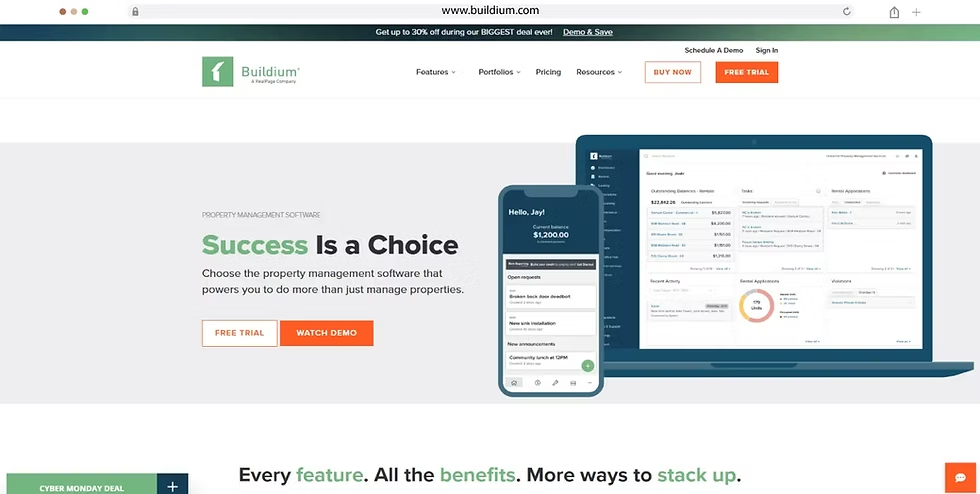
Buildium Accounting: A Complete Guide for Property Managers and Real Estate Professionals
The property management industry requires precision in financial tracking, tenant relations, and regulatory compliance. For landlords, investors, and management firms, accounting can quickly become overwhelming without a structured system. Buildium accounting offers an integrated platform that addresses these challenges, combining financial accuracy with the broader needs of property management.
Unlike generic accounting tools, Buildium is designed specifically for real estate professionals. It blends core bookkeeping features such as rent collection, expense categorization, and bank reconciliation with property-specific tools like tenant portals and lease tracking. This makes it not just accounting software but a complete property management solution.
Understanding Buildium Accounting
At its core, Buildium accounting is designed to help property managers maintain financial clarity. Traditional bookkeeping often involves multiple tools, spreadsheets, and manual data entry, all of which create risks of error. Buildium eliminates these inefficiencies by offering one centralized platform.
Every transaction, whether rent received, security deposit held, or maintenance expense recorded, flows into the accounting system. Property managers can then generate reports tailored to individual properties or entire portfolios. This ensures decision-making is based on accurate and up-to-date data.
What makes Buildium especially valuable is its automation. With recurring transactions, tenant invoicing, and integrated payment processing, managers spend less time on manual tasks and more time focusing on growth strategies.
Why Buildium Accounting Matters in Today’s Market
The real estate market is becoming increasingly competitive, with property owners and tenants expecting higher levels of professionalism and transparency. Buildium accounting plays a crucial role by delivering accurate financial insights, strengthening tenant trust, and reducing administrative workload.
Without a reliable accounting system, property managers risk delayed payments, mismanaged funds, and regulatory issues. Buildium addresses these problems by offering a platform built specifically for real estate accounting. From automating rent collection to preparing tax-ready reports, it ensures compliance and efficiency at every step.
Real-World Examples of Buildium Accounting in Action
Small Landlord with Multiple Units

Consider a landlord managing 10 rental units across different locations. Without Buildium, they might rely on spreadsheets and manual bookkeeping to track income and expenses. This approach often leads to confusion, especially when tax season arrives.
By using Buildium accounting, the landlord automates rent collection, assigns transactions to specific units, and generates monthly financial reports. With a few clicks, they can analyze which properties are performing best and identify areas that need improvement. This streamlined approach saves hours of manual work and improves accuracy.
Mid-Sized Property Management Firm

A property management company overseeing 150 units faces challenges far greater than an individual landlord. The firm must handle multiple owner accounts, track maintenance requests, and reconcile complex bank transactions.
Buildium accounting helps by offering owner-specific statements, consolidated reporting, and real-time insights into cash flow. Each property owner can access their own portal to view income and expenses, eliminating unnecessary back-and-forth communication. For the firm, this reduces workload while improving client satisfaction.
Real Estate Investor with Mixed Portfolios

Investors often manage both residential and commercial properties, each with unique financial structures. Buildium accounting enables them to categorize income and expenses by property type, ensuring profitability is measured accurately.
For example, an investor can track rent income from residential properties while monitoring lease payments from commercial tenants, all within the same system. This unified view empowers investors to make data-driven decisions about acquisitions, renovations, or divestments.
Benefits of Using Buildium Accounting
One of the most significant advantages of Buildium accounting is centralization. All financial data, from rent payments to vendor invoices, is stored in one place. This eliminates the risk of data silos and ensures consistent reporting.
Another key benefit is automation. Property managers can schedule recurring invoices, automate payment reminders, and reconcile bank accounts with minimal manual input. This reduces administrative burden and improves accuracy.
Accessibility is another strength. Buildium is cloud-based, meaning property managers, landlords, and owners can access their data from anywhere. This flexibility is particularly valuable for professionals managing properties across multiple locations.
Finally, compliance and tax readiness are simplified. Buildium accounting produces detailed financial statements that align with tax requirements, ensuring property professionals remain compliant while maximizing deductions.
Practical Use Cases
Reducing Errors in Rent Collection
With Buildium, tenants can pay rent online through automated portals, reducing late payments and errors from manual handling. Payments are automatically recorded in the accounting system, improving accuracy.
Streamlining Maintenance Expense Tracking
Every maintenance request and vendor payment flows into the accounting system, allowing managers to track expenses accurately and analyze long-term property upkeep costs.
Improving Owner Relations
Property owners expect transparency. Buildium accounting provides owner-specific reports that can be shared instantly, ensuring trust and professionalism in every client relationship.
Why Technology is Essential for Modern Property Accounting
Technology bridges the gap between complex real estate operations and financial clarity. Buildium accounting proves that specialized software outperforms generic tools by offering solutions tailored to property managers’ needs.
By integrating financial management with tenant and owner portals, Buildium ensures a seamless flow of information. This not only saves time but also creates a competitive advantage in a market where efficiency and professionalism are key.
Frequently Asked Questions
1. Is a Buildium account only for large property management firms?
No, Buildium accounting is suitable for both small landlords and large firms. Its scalability makes it adaptable for anyone managing rental properties, regardless of portfolio size.
2. How does Buildium accounting compare to generic accounting software?
Generic accounting tools lack property-specific features. Buildium includes tenant portals, owner statements, and rent collection tools, making it a better fit for real estate professionals.
3. Can Buildium accounting help with tax preparation?
Yes, Buildium generates detailed financial statements and reports that align with tax requirements. This ensures property managers remain compliant and simplifies collaboration with accountants.