Property Manager Bookkeeper: Complete Guide to Roles, Technology, and Use Cases
The real estate industry requires precise financial oversight and seamless operational management. One of the most effective ways to achieve this balance is by combining the roles of a property manager and bookkeeper. This hybrid function ensures both property operations and financial records are handled with accuracy and efficiency.
Property manager bookkeepers play a vital role in maintaining tenant relationships, overseeing maintenance, collecting rent, and keeping financial records aligned. For landlords and investors managing multiple properties, this dual responsibility is invaluable, providing visibility into both day-to-day operations and long-term financial health.
Understanding the Role of a Property Manager Bookkeeper
A property manager focuses on operations, handling tenants, property upkeep, and leasing activities. A bookkeeper, on the other hand, focuses on tracking numbers, expenses, reconciling accounts, and ensuring accurate financial reporting. When combined, these roles create a professional who can manage both sides of property ownership.
This combination minimizes the need for multiple hires and ensures that communication gaps between management and accounting are reduced. A property manager bookkeeper not only ensures properties run smoothly but also keeps financial records in order, which is critical for taxes, compliance, and profitability.
Why This Role is Becoming More Important
The demand for property manager bookkeepers has grown with the expansion of real estate portfolios and the rise of remote property ownership. Many investors now own properties across cities or states, making it difficult to oversee operations and finances separately.
Having a professional who can handle both sides allows owners to maintain full transparency. Instead of juggling two separate roles, property owners benefit from consolidated oversight, streamlined reporting, and reduced errors in communication between managers and accountants.
Benefits of Using Technology for Property Manager Bookkeepers
Modern technology has redefined how property managers and bookkeepers operate. Instead of manual spreadsheets or paper-based systems, cloud-based platforms now integrate property management with accounting.
These systems allow professionals to collect rent online, automatically log transactions, and reconcile accounts in real time. Tenants benefit from user-friendly portals, while landlords gain access to instant financial dashboards. Technology also minimizes human error, reduces delays, and offers data analytics for better forecasting.
In practice, this means a property manager bookkeeper can oversee maintenance requests, approve vendor payments, and generate financial reports within a single platform. For growing real estate portfolios, this level of integration is essential.
Real-World Examples of Property Manager Bookkeeper Solutions
Buildium for Property Managers and Bookkeepers

Buildium is widely recognized as a software that bridges the gap between property management and accounting. For property manager bookkeepers, Buildium allows rent collection, expense tracking, and tenant communication within one platform.
The relevance of Buildium lies in its ability to simplify complex tasks. Instead of switching between management software and separate bookkeeping tools, professionals can use Buildium as a one-stop solution. This integration saves time and enhances accuracy in both financial and operational reporting.
QuickBooks Paired with Property Management Tools
.webp?updatedAt=1747132699212)
QuickBooks is one of the most popular accounting solutions, and when paired with property management add-ons, it becomes an essential tool for bookkeepers who also manage properties. The system helps track rental income, reconcile bank statements, and generate tax-ready reports.
For property manager bookkeepers, QuickBooks provides the financial backbone, while property management platforms handle tenant interactions. This combination ensures that no detail is overlooked, especially when managing multiple units or clients.
AppFolio Property Manager

AppFolio offers an advanced system for professionals handling both management and bookkeeping. The platform includes online payment systems, expense categorization, and automated reporting features.
Its value lies in scalability. AppFolio is particularly useful for property manager bookkeepers who handle large portfolios or work in fast-growing markets. With everything accessible online, collaboration between owners, tenants, and vendors is smoother.
Propertyware for Single-Family Portfolios
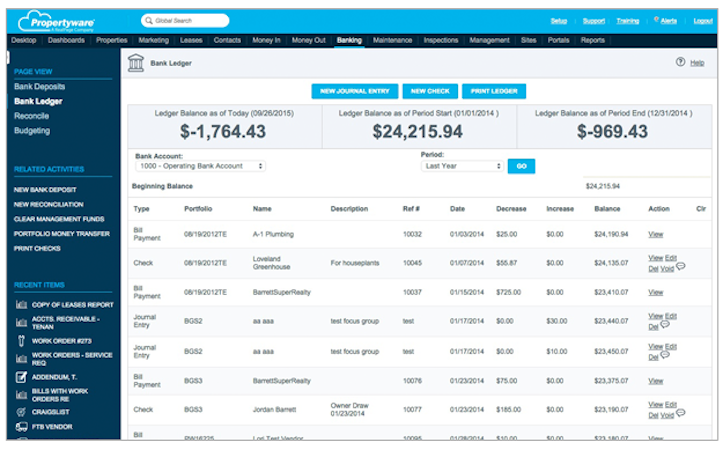
Propertyware specializes in single-family rental property management and accounting. For property manager bookkeepers, it provides tools for rent tracking, maintenance scheduling, and financial recordkeeping in one place.
This is especially relevant for owners or managers handling scattered-site properties. Instead of struggling with multiple systems, Propertyware consolidates data into one streamlined platform, improving efficiency and transparency.
Practical Benefits of Property Manager Bookkeepers
One of the primary benefits is efficiency. By merging the tasks of management and bookkeeping, professionals reduce delays caused by miscommunication. For example, when a maintenance expense is logged, it immediately reflects in financial reports without requiring separate updates.
Another benefit is cost savings. Instead of hiring a property manager and a separate bookkeeper, landlords can rely on one professional who covers both areas. This approach is particularly advantageous for small to mid-size property owners who need accuracy but want to control expenses.
Finally, improved accuracy is a major advantage. Property manager bookkeepers ensure that financial data directly matches operational activities. This reduces the likelihood of reporting errors and provides property owners with reliable insights for decision-making.
Use Cases of Property Manager Bookkeepers in Real Life
Managing Small Real Estate Portfolios
For landlords with fewer than 10 properties, a property manager bookkeeper is invaluable. Instead of spreading responsibilities across multiple professionals, one person ensures that both management and financial oversight are covered, reducing overhead costs.
Supporting Real Estate Investors
Many investors own properties in different locations. A property manager bookkeeper offers a central point of control, handling leases, tenant payments, and accounting. This role is particularly useful for investors who need consolidated reports for tax purposes or future acquisitions.
Handling Multifamily Complexes
Multifamily complexes involve multiple tenants, maintenance schedules, and significant financial flows. A property manager bookkeeper ensures that every operational activity has a financial record attached, streamlining oversight and reducing errors in revenue tracking.
Streamlining Property Management Startups
New property management firms often start small. By relying on professionals who combine bookkeeping with property management, these startups can operate efficiently without hiring multiple roles early on.
Frequently Asked Questions
1. What is the role of a property manager bookkeeper?
A property manager bookkeeper handles both the operational side of property management (tenant relations, maintenance, leasing) and the financial side (rent tracking, expense management, reporting). This dual role ensures properties are well managed and financially transparent.
2. Why is technology important for property manager bookkeepers?
Technology allows property manager bookkeepers to integrate tasks, automate payments, reduce errors, and provide real-time insights. Cloud-based platforms make it possible to manage tenants and financial data in one place, improving efficiency.
3. Who benefits the most from hiring a property manager bookkeeper?
Small to mid-size property owners, multifamily landlords, and real estate investors benefit most. They gain efficiency, accuracy, and cost savings by relying on one professional instead of splitting roles between management and accounting.